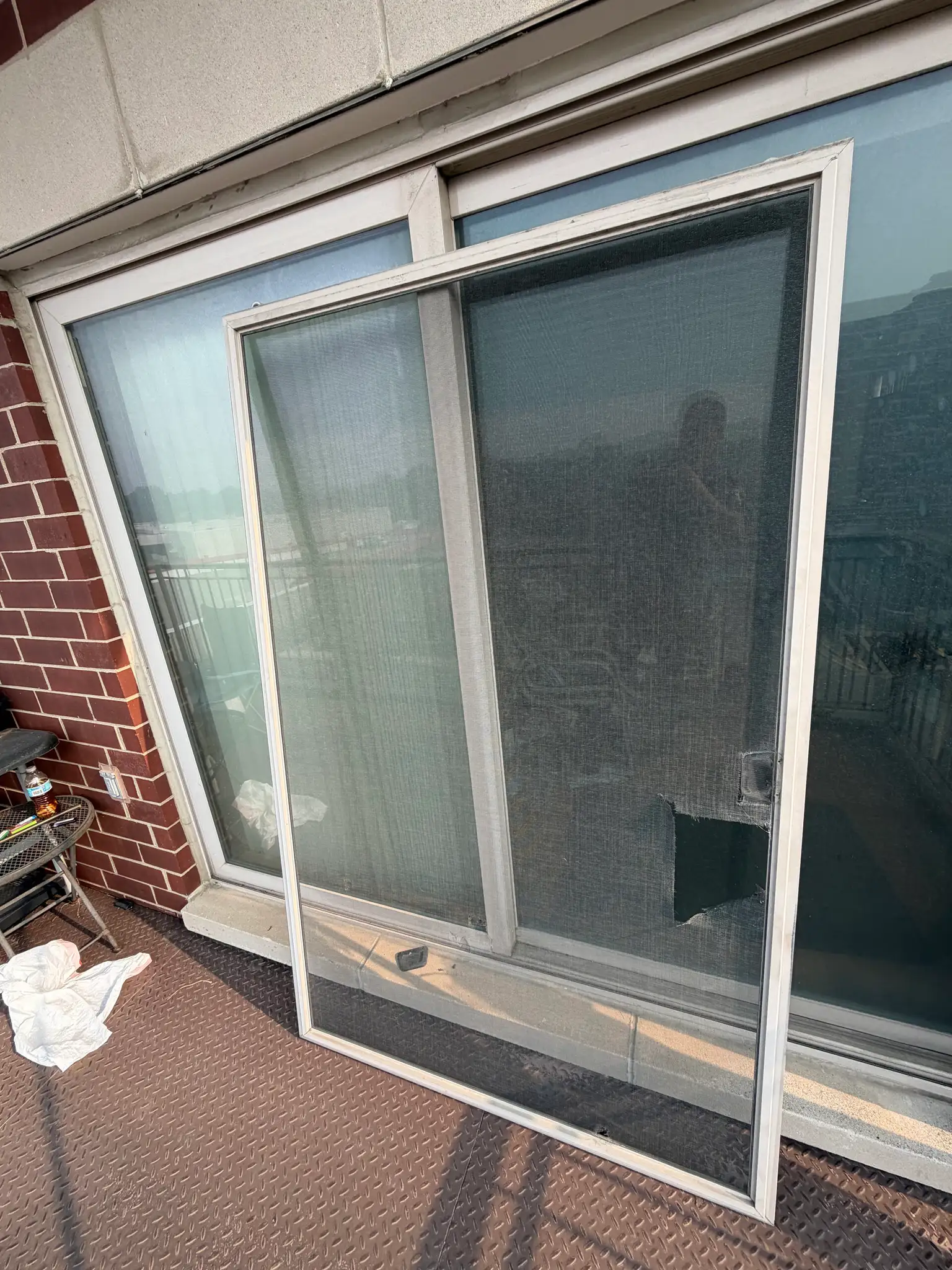
A sliding door can lock, look fine, and still bleed heat all winter. The bulb seal at the bottom, the pile along the jamb, and the interlock where the two panels meet are what actually separate your living room from a January wind off the lake. When those pieces flatten, the furnace runs and the floor in front of the door is cold no matter how new the glass is. Dynamic Innovations & Finishes replaces the compression weatherstripping and the interlock pile so the door seals at the height it actually sits.
Symptoms homeowners notice
- A visible curtain moving, or a hand that feels air at the meeting stile.
- Dust lines and condensation on the interior sill every cold morning.
- Higher winter bills with one room you avoid.
- Daylight at the interlock or a shrunken, chalky vinyl bulb along the bottom rail.
What is actually failing
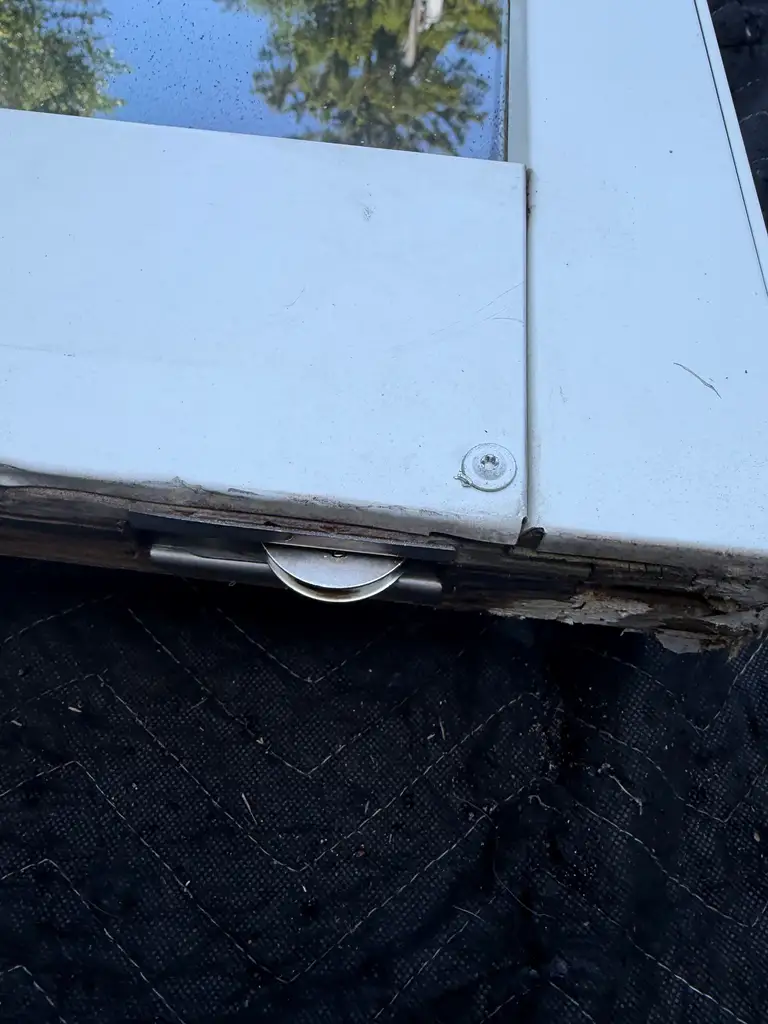
Slider seals are a set. The bottom sweep or bulb has to stay pressed to the sill without becoming a brake. The jamb pile has to touch the stile for the full height. The interlock, where the operable panel passes the fixed panel, uses a fin and pile that only work when both panels are at the right height. Flattened pile and hardened vinyl are the usual casualties after ten or fifteen Chicago seasons. A door that has dropped on bad rollers will also miss its seals, which is why we look at the rollers before we glue a new bulb onto a panel that is riding low. New seals on a dragging door tear up in a month and the draft comes back. When the rollers are sound, we match the kerf width so the new vinyl actually stays in the slot. Universal peel-and-stick foam is not a substitute for a kerf-mounted bulb, and it usually blocks the weeps.
Our repair process
We find the air with a hand and a smoke pencil or a tissue, not a guess from across the room. Kerf size, bulb height, and pile density are matched to the extrusion. Old vinyl is pulled, the slot is cleaned, and the new seal is rolled in so the seam is not at the latch. Interlock pile is replaced on both fins if both are tired. We adjust door height until the sweep kisses the sill through the full travel and the lock still throws. You should not have to choose between a door that seals and a door that slides. If those two goals fight, the rollers or the track are part of the same quote.
Why repair beats replacement
Air sealing is the cheapest thermal upgrade on a patio door that still has good glass and a square frame. A replacement quote often bundles new glass, a new frame, and new trim to solve a dollar’s worth of flattened pile. We replace the pile. The insulated glass stays if it is clear, the brick opening stays, and the room stops being the coldest place in the house. If the glass is also fogged, we will say so. A seal kit will not fix a failed insulating unit.
Questions about door drafts
Will new weatherstripping make the door hard to open?
It should add a little resistance and no grinding. If the only way to seal is to jam the panel, the door is out of adjustment and we fix that first.
Can you stop a draft at the meeting rail only?
Yes, when that is the only leak. We do not replace every seal on the door to fix one interlock, and we will not ignore a dead bottom bulb if air is also coming under the panel.
Is this the same as a window draft?
The idea is the same and the parts are not. Patio door bulbs, pile, and interlocks are specific extrusions. Window sash vinyl is a different job.
Do you guarantee the seal?
Smooth glide and the seal we install are covered by our three-year workmanship guarantee, as long as the track stays clear and the door is not left dragging on dead rollers.
Ready to schedule? Request a repair estimate or call (708) 475-1095.